SWI-Prolog has a sense of humor
Deep Thought jokes just never get old! SWI-Prolog, when asked an open-ended question for which no rules are defined, answers like so:
?- A.
% ... 1,000,000 ............ 10,000,000 years later
%
%       >> 42 << (last release gives the question)
?-
That's just awesome  Reminded me that I haven't (re)read HHGG in recent years - maybe I'll put it on me phone. Seems like the perfect book to read a chapter here and there when bored.
Google Chrome OS
I had to do a double check if it's not April 1st. Why Chrome OS? And why not Android?
Firstly, this does not sound like another Linux distro. Yes, it might run on top of a Linux kernel and borrow some UI code, but you can think of this as a web browser that runs on the bare metal. What use is such a thing? (ASUS is already doing something similar by embedding a stripped down Linux in their motherboards. It boots in a couple of seconds and lets you browse the web and check your email.)
Google makes money off people using the Internet. More than that, they especially benefit from stuff that runs on open platforms - HTML and JavaScript as opposed to Flash and Silverlight. Hence the massive investment in technologies such as GWT and Gears that enable full-blown interactive applications inside a browser using widely understood open standards. The more people publishing useful stuff on the web, the more Google stands to benefit. The more users on the web, the more Google stands to benefit.
The Chrome OS could work quite well on a stripped down netbook (even lower spec than what we call a netbook today), touch-screen tablets, or minimalist desktop computers with specs along the lines of netbooks.
Given the recent popularity of netbooks, and Microsoft starting to push Windows 7 to OEMs instead of the ancient XP, maybe Google is hoping that some of them will jump ship and give Linux a second chance. What's going to be different this time? If you don't pretend it's a full-blown computer but rather a web-only "device", it's easier to sell it to people who already have several computers in their household.
The ultra low hardware requirements mean that the machine itself should be cheaper to produce too, so once again adding to the "it's a web appliance, not a computer" selling point. Lastly, this must have been fairly easy to do from a technical standpoint. It's simply repackaging a bunch of existing code into something usable so not a hugely risky project for Google.
If some Taiwanese manufacturer jumps on board and produces anything even remotely successful based on this software, it only further entrenches the Web as an application platform. And that, I think, is exactly what Google is hoping for. It's very much the same thinking as that behind Android, just aimed at a different segment of the hardware market.
UPDATE: Further reading - coverage from around the web:
I Have a Space Camera!
The Pentax K10D travels to space! (And back in one piece, presumably  ) [Via]
BMW 109-003 and Rolls Royce Merlin
I had a great day out at the SA National Museum of Military History with a bunch of people from a local photography club. I spotted this curious exhibit in one of the halls:
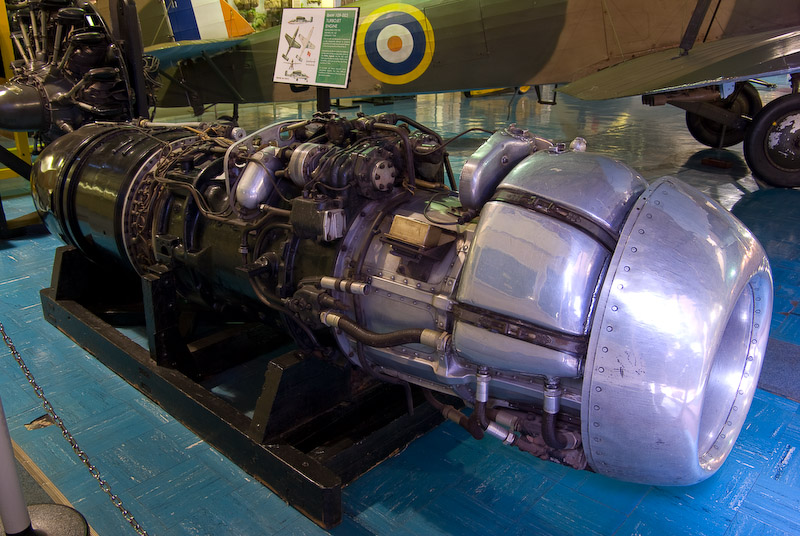
The sign reads:
BMW 109-003 Turbojet Engine
Developed for the Heinkel He 163
Germany, 1945This aircraft was designed in response to a last desperate attempt to produce quantities of simple jet-powered fighters in the closing months of World War II.
Intended to be flown in the final defence of Germany by the young glider pilots of the Hitler Jugend, the He 162 went from specification to maiden flight in the incredibly short period of the last three months of 1944.
A number of these aircraft were completed despite the very difficult conditions in Germany in 1945 but none saw actual combat.
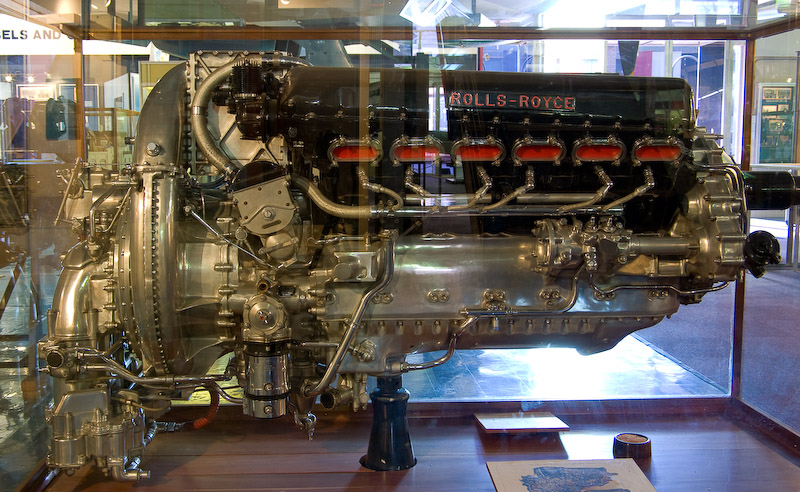
More info. And just for balance: they have a beautiful example of a Rolls Royce Merlin engine there as well:
sudo read this article
Cool article about xkcd in the New York Times: This Is Funny Only if You Know Unix.
Chase Jarvis Doesn’t Use a Light Meter
I am glad at least one pro agrees with me in that in the age of digital cameras and instant histograms, light meters are basically redundant. Also, check out this amazing Dubai shot (also via Chase's blog):

On The Subject of Windows…
Vista might be all the rage these days (or not), but this blast from the past is too much funny!
Rather late than never: South Africa
Three months is a long enough time to come up with something to write in one's blog, no? Well, you would think that to be the case. It seems my mind has been far too occupied with other things for the period though. Like getting around the country. Around the end of April/early May, I clocked some 6,000km driving around South Africa - I visited a bunch of places I always meant to but never really had enough time.
Sadly, the trip didn't go as planned because my companion was stuck overseas. Hope he hasn't given up and we'll go explore together soon - I'll have a better plan for next time.
One of the notable places I visited was the Kruger National Park,
more info here and here. I will definitely be back for more! I found it to be an amazing place - it's odd because I'm not really the out-in-Africa type. Which reminds me, I still haven't sorted through all of the pictures (there's about 3,000 of them), but a selection of the best is in my Flickr album.
That's it for now. I'll try and update on a more frequent basis in future for you, dear readers
Coca-Cola Colab: featuring Seether, Collective Soul, Metallica
Yesterday we went to see this concert thrown together by Coca-Cola and local radio 5fm. After the usual parking difficulties, massive crowds, lack of hydration, it was just too much awesome to see Metallica live at last. Contrary to what one might expect, they didn't look like they're about to retire any day now at all! The supporting bands were also top notch: I was quite surprised by Collective Soul which I didn't really know from before.